Confirm the death, then find the record
Official death records, historical newspapers, burial databases and the commercial obituary sites reporters reach first. Each link was checked in October 2026.
On this page
- What does an obituary and death records search cover?
- Start here
- How do you get an official death record?
- Can reporters use the Social Security Death Master File?
- Where do you find historical obituaries?
- How should you treat funeral home notices and obituary platforms?
- Which records show where someone is buried?
- How do you check court and probate records?
- Where do you find mortality data for a story?
- How do you check a death report that may be a hoax or an error?
- Reporting checks for this beat
- Sources
What does an obituary and death records search cover?
A death records search covers four jobs: confirming a death, researching a subject, finding old obituaries and checking death data. Each job needs a different source. A record confirms a death. A notice announces it. A statistic counts it.
This guide does not cover writing an obituary or tracing a family tree. It does not help you find living people. For that, start with White Pages and Public Source Lookup.
Start here
CDC Where to Write for Vital Records
The National Center for Health Statistics (NCHS) directory to every state and territory vital records office. Death records are filed where the death occurred.
SSA death information
The Social Security Administration (SSA) explains what its death files hold and who can get them.
Chronicling America
Free digitized U.S. newspaper pages from the Library of Congress, published through 1963.
VA Nationwide Gravesite Locator
Burial locations for veterans and their family members from the National Cemetery Administration.
CDC WONDER
Query death counts and rates from death certificate data. Save the query you ran.
How do you get an official death record?
A death certificate is filed with the state or local vital records office where the death occurred. The CDC says an official certificate of every death “should be on file in the locality where the event occurred” (CDC application guidelines). It adds that these records are “filed permanently in a State vital statistics office or in a city, county, or other local office.”
NCHS states the limit plainly: “The federal government does not distribute certificates, files, or indexes with identifying information for vital records” (Where to Write for Vital Records). You request the record from the state or local office. Follow these steps:
- Find the place of death. The right office depends on where the death happened.
- Open that state’s page on the CDC list, then go to the state office’s own site. The CDC pages we read carry review dates from 2015 to 2026, so confirm fees and rules with the office.
- Give the office what it asks for. The CDC guidelines list the full name, date and place of death, purpose of the request and your relationship to the person.
- Ask which copy types the office issues. California, for one, issues certified informational copies without a notarized statement.
State rules differ. These four state sources show how:
| State | What the source says | Source |
|---|---|---|
| Florida | Cause-of-death information on records less than 50 years old is “confidential by law.” Applications that request cause of death need the signature, relationship to the decedent and photo ID. | CDC page, reviewed April 23, 2026 |
| California | A certified copy needs a notarized sworn statement. A certified informational copy does not. State records start in July 1905. | CDC page, reviewed May 16, 2022 |
| Texas | State recorded death records start in 1903. Copies can be requested online through Texas.gov or by mail. | CDC page, reviewed July 15, 2019 |
| Pennsylvania | Death certificates 50 years old and older are publicly available at the State Archives. Newer certificates are restricted and held by the Division of Vital Records. | Pennsylvania State Archives page |
VitalChek (Commercial) describes itself as the online vital records partner for more than 450 government agencies. Compare the agency’s own ordering page before you pay a vendor. Some records are closed to you. A state may limit who can get a certified copy or what a copy shows.
For a service record instead of a death record, see the Military and National Security beat guide.
Can reporters use the Social Security Death Master File?
Not for recent deaths without certification. Federal rules bar disclosing Death Master File (DMF) information for three calendar years after a death unless the requester is certified.
The rule is in 15 CFR Part 1110. Its first section says the Bipartisan Budget Act of 2013 “prohibits disclosure of DMF information for an individual during the three-calendar-year period following the individual’s death, unless the person requesting the information has been certified.” Certification asks the applicant to state “a legitimate fraud prevention interest” or “a legitimate business purpose pursuant to a law, governmental rule, regulation, or fiduciary duty.” The National Technical Information Service (NTIS) runs the program. Its certification review page lists an annual certification form and a systems safeguards attestation every three years. Read the rule and ask NTIS before you plan a story around it.
The SSA shares its full death file only with certain federal and state agencies. It gives NTIS a public file that excludes state death records, per its death information page. The SSA adds: “It is important to note our records are not a comprehensive record of all deaths in the country.”
NTIS makes the same point on its Death Master File site: “the absence of a particular person is not proof this person is alive.” A hit or a miss in any DMF-based lookup proves nothing by itself.
NCHS limits the National Death Index to researchers. It says “NDI services are available only to researchers for statistical purposes in public health and medical studies.”
Where do you find historical obituaries?
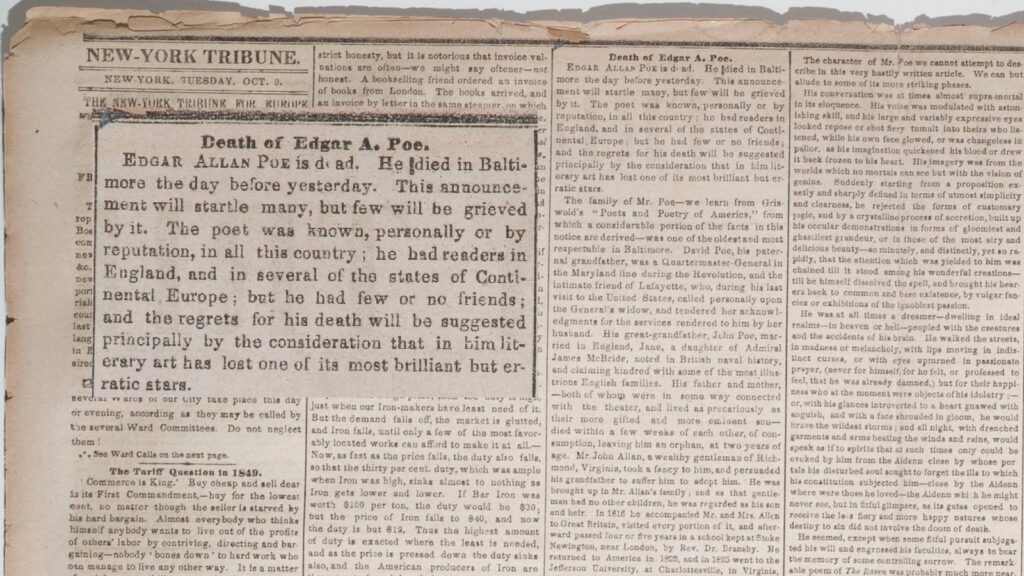
Start with the newspaper that ran the notice. Chronicling America is free and holds pages published through 1963. The Library of Congress says it has “millions of newspaper pages from nearly every state and territory” in its Chronicling America researcher guide. That guide also points to the Directory of U.S. Newspapers in American Libraries, which shows which papers ran in a place and period and where copies are held.
Not every paper is online. The Library of Congress says it “does not have every U.S. newspaper ever published” in its historical newspapers guide. The same guide notes that digitized pages are typically word-searchable and microfilm is not, so plan to read microfilm page by page.
To find the paper first, use Newspapers and News Archives, Current U.S. Newspapers and U.S. Local Newspapers. Then check the paper’s own archive and the local library.
FamilySearch (Church-funded) is free. The Church of Jesus Christ of Latter-day Saints funds it, and FamilySearch says unlimited access to its records needs a free account. Its obituary search tips say: “Many obituaries, particularly from the United States, are indexed and searchable by name.” Limit the search to death records.
Commercial archives cost money. Newspapers.com (Commercial) says it covers newspaper pages from 1690 to the present and offers a free trial. Ancestry (Commercial) says record access requires a paid membership. Ask your newsroom library or a public library whether it already holds a subscription.
In short: use a record to confirm, a notice to locate and a statistic to count. The core sources are state vital records offices, the SSA and NTIS death files, and Library of Congress newspapers.
How should you treat funeral home notices and obituary platforms?
Treat every notice as the family’s statement, not an independent check. Know the difference between an obituary and a death notice. The Los Angeles Public Library says Los Angeles city newspapers “generally only publish obituaries for well-known citizens” and that paid death notices appear more often. That is one library’s account of one city’s papers, so check practice at the paper you need. The same library guide says residents who grew up elsewhere often have obituaries in their hometown newspapers. Legacy.com (Commercial) says families create the tributes on its site and that obituaries run in newspapers and other print and online outlets. A funeral home page is written by the funeral home.
A Columbia Journalism Review (CJR) “Regret the Error” column by Craig Silverman said a paid obituary can be placed in a paper only if a funeral home or a family member confirms the death. It added that this check does not always apply on the editorial side. See Death by Obiticide. The same column describes a living woman reported dead after a funeral home pulled the file of a similarly named client.
In practice, call the funeral home or the family. Match at least two details beyond the name, such as age, city and date. Save the notice URL and the time you read it.
Which records show where someone is buried?
Use the VA Nationwide Gravesite Locator for veterans and family members, and ask the cemetery office for everyone else. The National Cemetery Administration says its locator covers burials in “VA national cemeteries, state veterans cemeteries, various other military and Department of Interior cemeteries,” plus veterans in private cemeteries when the grave has a government marker. Search with the Nationwide Gravesite Locator.
The VA lists limits. For private cemeteries it says “we do not have information available for burials prior to 1997.” It also says “some searches may contain less information than others.”
Find a Grave (Commercial) says its memorials are created by its community. The Library of Congress names Find a Grave and BillionGraves in its genealogy basics guide: “These sites are based on volunteer submissions and are not necessarily complete.” The same guide says to ask a cemetery’s office or board for burial records.
How do you check court and probate records?
Ask the county or state court clerk where the person lived. The court that handles wills and probate varies by state. The Library of Congress courthouse records guide for New York lists probate with Surrogate’s Court and coroner’s inquests with the County Clerk. Other states use different courts and offices.
The Library of Congress warns: “Keep in mind that most records have not been digitized.” Call the clerk. Ask what a probate file for the person would contain and whether a docket book and a paper file both exist. For federal and state case records, use the Crime, Courts and Law beat guide. For a records request, use the workflow in Local News Resources. To find the right local office, start at the Regional desk.
Where do you find mortality data for a story?
Use NCHS and CDC WONDER for counts, and name the dataset and year. NCHS reports: “A total of 3,072,666 resident deaths were registered in the United States in 2024.” The source is its mortality statistics page. That count covers U.S. residents and deaths registered in 2024.
The same page lists “Mortality in the United States, 2024” from January 29, 2026 and “Provisional Data, 2025” from July 2, 2026. Say which release you used.
CDC WONDER Underlying Cause of Death, 2018-2024 returns counts and rates by county, age group, sex, race and cause. Its terms bar “death counts of 9 or fewer” from publication and any attempt to learn the identity of a person in the data. WONDER cannot confirm that one named person died. For health beat context, see the Health beat guide.
How do you check a death report that may be a hoax or an error?
Confirm the death with the family or an official source before you publish. These steps are desk practice, not legal rules.
- Treat the first report as a lead. Save the post URL, account name and time with the Journalist Toolbox verification log.
- Reach the family or a funeral home. Use a family spokesperson where one exists. Say who you are and why you are calling.
- Ask the agency that would know. That may be a medical examiner, a coroner or the police agency that responded. NCHS publishes a handbook for medical examiners and coroners on registering deaths.
- Match identity on two or more details. Age, city and dates separate namesakes.
- Do not rely on a database miss or hit. The NTIS warning above applies to any list built from death files.
- Attribute and limit. Write “the family said” or “the coroner’s office confirmed.” If you cannot confirm, do not publish a death.
- Correct fast. If you reported a death that did not happen, correct it in the same place and tell the person and the family. See the Editorial Standards corrections policy.
- Ask before you print a cause of death. Some states restrict cause-of-death data on recent records, as the Florida page above shows. The family may also decline to share it.
AssignmentEditor.com’s standards page says: “Directory matches do not establish identity, and publication requires a separate public-interest judgment.”
Reporting checks for this beat
- Do you have the family, a funeral home or an official record, or only a notice?
- Does the name match on at least two other details such as age, city and date?
- Which state or local office holds the record, and what are its access rules?
- Is the newspaper you need digitized? If not, who holds the microfilm?
- Is the burial database built from official records or from volunteer entries?
- Which dataset, year and release does your death number come from?
- Is any published death count nine or fewer?
- Who wrote the notice, and who owns the commercial site you are citing?
Next step: Newspapers and News Archives
Sources
- CDC Where to Write for Vital Records, cdc.gov
- CDC Where to Write: Application Guidelines, cdc.gov
- CDC Where to Write: Florida, California, Texas, cdc.gov, and Pennsylvania State Archives, pa.gov
- SSA Requesting SSA’s Death Information, ssa.gov
- NTIS Death Master File, dmf.ntis.gov
- 15 CFR Part 1110, ecfr.gov
- NTIS Limited Access DMF certification review, ntis.gov
- CDC National Death Index, cdc.gov
- Library of Congress Chronicling America, loc.gov
- Library of Congress Chronicling America guide, guides.loc.gov
- Library of Congress historical newspapers guide, guides.loc.gov
- FamilySearch obituary tips and free-access help, familysearch.org
- VitalChek, Newspapers.com, Ancestry, Legacy.com, Find a Grave (commercial)
- Columbia Journalism Review, cjr.org, and Los Angeles Public Library, lapl.org
- VA National Cemetery Administration, cem.va.gov
- Library of Congress genealogy basics and New York courthouse records, guides.loc.gov
- NCHS mortality statistics, cdc.gov
- CDC WONDER, wonder.cdc.gov
- NCHS handbook for medical examiners and coroners, cdc.gov
Sources
- CDC Where to Write for Vital Recordscdc.gov
- SSA death informationssa.gov
- Chronicling Americaloc.gov
- VA Nationwide Gravesite Locatorgravelocator.cem.va.gov
- CDC WONDERwonder.cdc.gov
- Pennsylvaniapa.gov
- VitalChekvitalchek.com
- 15 CFR Part 1110ecfr.gov