Treat the scanner as a lead, then confirm it
Where to listen to police and fire radio, how the systems work, and how to confirm what you hear before you report it. Each link was checked in October 2026.
On this page
- What does a scanner give a reporter?
- Start here
- Where can you listen to police and fire radio online?
- How do police radio systems work?
- Is police radio still open to the public?
- How do you find frequencies and talkgroups?
- Do police scanner codes mean the same thing everywhere?
- How do you confirm what you hear?
- Is it legal to listen to a police scanner and publish what you hear?
- What should you check before you report scanner traffic?
- Sources
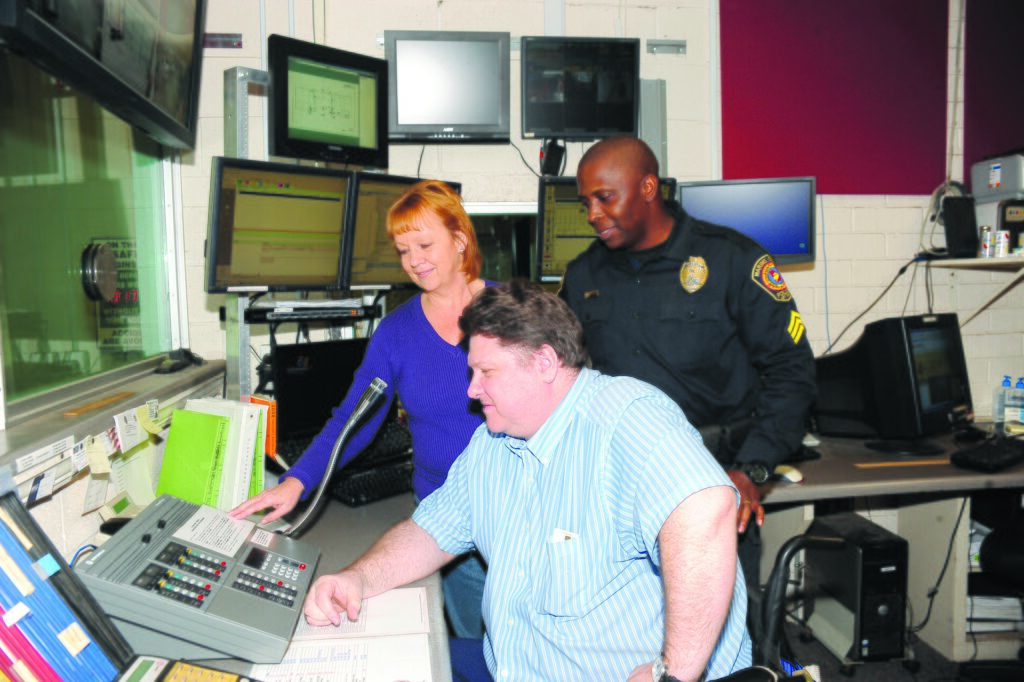
What does a scanner give a reporter?
A scanner gives you early leads on police, fire and rescue activity. It does not give you confirmed facts.
The Radio Television Digital News Association (RTDNA) (Trade group) puts it this way in its guidance on police scanners: “Scanner traffic is a direct source of information as it happens. But it is always unconfirmed.”
Bad information can loop through a scanner. In April 2013, Slate reported during the Boston Marathon bombing coverage that “the false suspect names also surfaced on the Internet, including Reddit, before they were heard on the scanner.”
This guide covers newsroom use. It does not cover buying a scanner, programming a specific model or amateur radio licensing.
Start here
FCC Universal Licensing System
Search FCC radio licenses by licensee, county or state, and frequency. Use it to check who holds a license on a frequency.
RadioReference database (Commercial)
Browse identified frequencies, trunked systems and talkgroups by state, metro area or ZIP code. Contributors submit the data. Paid tiers add archives and downloads.
CISA Project 25
The federal explanation of Project 25, the set of standards for interoperable public safety radio equipment.
18 U.S.C. 2511
The federal wiretap statute, including the exemption for radio traffic that is readily accessible to the general public. The official edition is on GovInfo.
RTDNA scanner guidance (Trade group)
Legal and ethical notes on using scanner traffic, compiled for broadcasters by the law firm Wiley Rein LLP.
Open Government Guide (Advocacy)
State-by-state summaries of open records and open meetings law from the Reporters Committee for Freedom of the Press. Use it to check your state’s rules before you request police or dispatch records.
Where can you listen to police and fire radio online?
Volunteer-run streams, trunked-system archives and phone apps carry scanner audio. Feed quality, delay and ownership vary.
| Service | What it offers | Archive or delay |
|---|---|---|
| Broadcastify (Commercial) | Its Browse page listed 6,932 U.S. live feeds on October 30, 2026. Listening is free. | Premium lists “365 days of live audio archives.” Some feeds carry delay notes. |
| Broadcastify Calls (Commercial) | A call-capture platform. Its tagline says “Every call on every captured radio system is available live and archived.” | Premium lists 365 days of Calls archives. |
| OpenMHz | A free site where people running Trunk Recorder share recordings of trunked systems. A sole proprietor runs it. | The About page gives no fixed archive period. It lists planned tiers with 5-day, 3-month and unlimited archives and says only a free tier exists now. |
| Scanner Radio (Commercial) | An iOS app from GordonEdwards.net LLC. Free with in-app purchases and advertising. | Plays feeds hosted by Broadcastify, per Broadcastify’s help page. |
| CrimeIsDown (Commercial) | A Chicago-focused site with scanner transcripts and recordings. Patreon tiers unlock transcript search. | Chicago Police Department zone feeds are delayed 30 to 35 minutes. |
Services marked (Commercial) sell subscriptions, ads or memberships. Read the editorial standards for how this site selects them. Broadcastify’s list of supported iOS apps names Scanner Radio and other apps that play its feeds.
Check three things before you rely on a stream.
- Delay. Broadcastify’s Official Feeds list carries notes such as “FEED IS ON A DELAY” and “Feed is 30 minutes delayed.” Read the feed description before you note a time.
- Source. The Scanner Radio listing says its audio is “provided by volunteers (and, in many cases, police and fire departments themselves).” Ask who runs the feed before you cite it.
- Reuse. The OpenMHz terms require credit and bar use that would “misrepresent a situation.” They also warn: “You should not assume that contributed Content will be reliably maintained.” Keep your own notes of the feed, time and time zone.
How do police radio systems work?
Conventional systems use fixed frequencies. Trunked systems share a pool of frequencies among many talkgroups.
- Conventional. The RadioReference Wiki says conventional refers to “frequencies that are not a part of a trunked radio system.”
- Trunked. In the wiki’s trunking overview: “Trunked Radio Systems share a small pool of frequencies among a large number of users.”
- Talkgroup. A talkgroup is a virtual radio channel on a trunked system. A group of users, such as one agency’s patrol units, shares it.
- Digital. CISA says Project 25 “is a set of standards that manufacturers can follow to ensure that their LMR equipment can interoperate.” APCO International says users and manufacturers develop the standards under the ANSI-accredited Telecommunications Industry Association. The RadioReference Wiki says audio on P25 trunked systems is “exclusively digital.”
- Equipment limits. The wiki’s trunking overview says some systems “cannot be monitored by current trunk-tracking scanners at all.” Check that your scanner or feed source handles your system’s mode.
- Coverage. On multi-site systems, you “must rely on actual subscribers to cause desired traffic to appear on the site you are listening to.” A quiet feed does not mean a quiet scene.
In short, a scanner, stream or app gives you a lead from a conventional or trunked radio system. The lead is only as good as the feed, the tower and the time stamp. Next you decide whether the channel is still open, find the system in RadioReference and FCC records, and confirm with the agency.
Is police radio still open to the public?
Some agencies now encrypt dispatch channels, and a scanner cannot play encrypted audio.
- Database counts. RadioReference’s database home page listed 45,460 encrypted talkgroups among 329,279 talkgroups on October 30, 2026. It listed 4,196 encrypted frequencies among 226,973 frequencies. Contributors flag these records, so the counts do not measure how many agencies, calls or residents are affected.
- Trend. The Reporters Committee for Freedom of the Press (RCFP) (Advocacy) reported in June 2021 that at least 10 cities and localities had adopted police radio encryption since October 2020. In January 2023, RTDNA said the trend was “rapidly accelerating.”
- Agency reasons. CISA says encryption “ensures effective security where information cannot be intercepted and used to hinder emergency response or endanger responders and the public.” The CISA encryption page lists planning guides for agencies. The New York Police Department said in a statement that encryption is “necessary for both the safety of law enforcement, as well as to protect the privacy interests of victims and witnesses,” as reported by the Associated Press.
- Colorado. HB21-1250 became law after the governor signed it on July 6, 2021. The official summary says the act “requires a governmental entity that encrypts its radio communications to adopt an encryption policy to provide access to unencrypted radio transmissions for members of the media.” In August 2022, the Colorado Freedom of Information Coalition reported, in a post on the Colorado Broadcasters Association (Trade group) site, that Denver and Aurora reporters still could not tune in a year after the signing.
- New York. The legislature passed a bill in June 2025 to preserve media access to encrypted police radio. Gov. Kathy Hochul vetoed it in December 2025. Her veto memo said, as quoted by amNY: “Municipalities remain free to make their own decisions as to whether to prohibit police forces from encrypting radio transmissions.”
RTDNA’s 2023 post says policies differ by department. Some agencies delay the release of information, some decrypt for media personnel, and many encrypt entirely. Ask your agency for its media access policy in writing.
Do not try to decode encrypted channels. The federal exemption for scanning covers radio communications “readily accessible to the general public.” Federal law defines that term to exclude communications that are “scrambled or encrypted.” Ask your counsel before you attempt anything else.
How do you find frequencies and talkgroups?
Look up your county in the RadioReference database, then check the licensee in FCC records.
- Name the agency and jurisdiction. Confirm which city, county, state or tribal agency covers the place. The Regional and Local News Research guide shows how to build a contact map.
- Browse RadioReference. The browse page offers state, metro area and ZIP code routes. Note the system type, the talkgroup names and any encrypted flags. RadioReference says contributors submit the data and a volunteer team maintains it.
- Check FCC records. The FCC Universal Licensing System offers an Advanced License Search by licensee state, ZIP and name. Its Geographic search covers “coordinates, county/state, address and frequency information.” Use it to check the licensee behind a frequency.
- Confirm the label. A talkgroup is a virtual channel set up by the system operator, so a database label is a contributor’s reading of it. Ask the agency what a talkgroup carries before you describe it in print.
- Log what you used. Record the system, talkgroup, source and date.
Do police scanner codes mean the same thing everywhere?
No. Agencies develop their own ten-code systems, so the same code can mean different things.
A CISA plain language guide gives an example: “10-88 may mean “present phone number” in one agency and “officer needs help” in another.” The guide adds that coded language “is not standardized across jurisdictions.” Get the agency’s own code list or ask its spokesperson before you quote a code.
How do you confirm what you hear?
Confirm scanner traffic with the agency, a written record or a second independent source.
- Agency spokesperson. Call the agency’s public information officer or watch commander. Ask what happened, where and what they can release. Use the Crime, Courts and Law guide for charging documents and dockets once a case exists.
- Dispatch and call logs. Access to police records varies from jurisdiction to jurisdiction, RCFP wrote in 2012. Check your state in the Open Government Guide, then follow the public-records workflow on this site. Some cities publish call data. The City of Seattle’s Call Data dataset says it only contains records of police response and that calls cleared before an officer can respond are not included. It also says calls are located only to the “beat” level. The NYPD’s Calls for Service dataset says it documents entries into the NYPD 911 system.
- 911 center. The National 911 Program at NHTSA runs 911.gov, which collects resources on 911 operations, including computer-aided dispatch (CAD). Use it to learn the terms before you call a local records office.
- Second source. Another listener or a social post repeating the traffic is not confirmation. The Journalist Toolbox verification workflow on this site says a second account repeating the first is not corroboration.
Is it legal to listen to a police scanner and publish what you hear?
Federal wiretap law exempts listening to unencrypted police radio. State law and publishing rules vary, so check your state.
- Listening. 18 U.S.C. 2511(2)(g)(ii) says it is not unlawful “to intercept any radio communication which is transmitted” “by any governmental, law enforcement, civil defense, private land mobile, or public safety communications system, including police and fire, readily accessible to the general public.”
- Publishing. The law on republishing scanner audio under 47 U.S.C. 605 is unsettled, according to RTDNA’s guidance, so check with counsel before you air or post it.
- Vehicles. State laws differ. New York’s Vehicle and Traffic Law section 397 makes it a misdemeanor, with listed exceptions, to equip or knowingly use a motor vehicle with a receiver for police frequencies without a permit from the local authority the statute names. Florida’s statute 843.16 bars installing or transporting such receivers in a motor vehicle, with an exception for a “recognized newspaper or news publication engaged in covering the news on a full-time basis.” These are two examples, not a survey.
- Your state. Read your state’s statutes and ask your newsroom counsel before you equip a vehicle or air audio. This guide is not legal advice.
What should you check before you report scanner traffic?
Treat every detail as unconfirmed until an official or a record confirms it.
- Treat it as unconfirmed. Label it “according to scanner traffic” in your notes until the agency confirms it.
- Identify the source and time. Record the feed, system, talkgroup and time with time zone. Check whether the feed is delayed.
- Check the codes. Get the agency’s code list. Do not assume a ten-code means what it meant in another city.
- Match it to a second source. Use an agency spokesperson, a written record or a witness. A repeat of the same traffic does not count.
- Protect victims and juveniles. The Society of Professional Journalists (SPJ) (Trade group) code of ethics says: “Use heightened sensitivity when dealing with crime victims (especially victims of sex crimes), juveniles, and sources or subjects who are inexperienced or unable to give consent.” Leave out names, addresses and medical details unless confirmed and necessary.
- Do not name suspects from radio traffic. The SPJ code says to “cautiously consider whether to identify suspects before they face charges.”
- Weigh legal access against ethics. The SPJ code says: “Recognize that legal access to information differs from the ethical justification for reporting it.” The RTDNA code of ethics names “children, victims, vulnerable adults” as groups that deserve special consideration.
- Save and log. Keep the feed name, time, your confirmation source and your decision in a verification log, such as the one in the Journalist Toolbox.
Next step: Crime, Courts and Law
Sources
- FCC Universal Licensing System, wireless2.fcc.gov
- RadioReference database, radioreference.com
- RadioReference browse page, radioreference.com
- RadioReference Wiki: Conventional, Trunking Basics, Talkgroup, APCO Project 25, wiki.radioreference.com
- CISA Project 25, cisa.gov
- CISA encryption resources, cisa.gov
- CISA Plain Language Guide, cisa.gov
- 18 U.S.C. 2510, law.cornell.edu
- 18 U.S.C. 2511, law.cornell.edu and govinfo.gov
- 47 U.S.C. 605, law.cornell.edu
- RTDNA scanner guidance, rtdna.org
- RTDNA 2023 encryption post, rtdna.org
- RTDNA Code of Ethics, rtdna.org
- SPJ Code of Ethics, spj.org
- RCFP Open Government Guide, rcfp.org
- RCFP, “Nothing but static” (2012), rcfp.org
- RCFP police radio encryption trend, rcfp.org
- Slate, Boston Marathon scanner rumors, slate.com
- Broadcastify Browse and Official Feeds, broadcastify.com
- Broadcastify Calls, broadcastify.com
- Broadcastify supported iOS apps, support.broadcastify.com
- OpenMHz, About and Terms, openmhz.com
- Scanner Radio on the App Store, apps.apple.com
- CrimeIsDown, crimeisdown.com
- APCO International on Project 25, apcointl.org
- Colorado General Assembly HB21-1250, leg.colorado.gov
- Colorado Broadcasters Association, coloradobroadcasters.org
- Police1 (Associated Press), police1.com
- amNY, amny.com
- New York Vehicle and Traffic Law 397, nysenate.gov
- Florida Statutes 843.16, flsenate.gov
- City of Seattle Call Data, data.seattle.gov
- NYC Open Data, NYPD Calls for Service, data.cityofnewyork.us
- National 911 Program, 911.gov
Sources
- Federal lawlaw.cornell.edu
- “always unconfirmed.”rtdna.org
- “the false suspect names also surfaced on the Internet, including Reddit, before they were heard on the scanner.”slate.com
- FCC Universal Licensing Systemwireless2.fcc.gov
- RadioReference databaseradioreference.com
- CISA Project 25cisa.gov
- GovInfogovinfo.gov
- Open Government Guidercfp.org